Size Runs Start with Measurements
A useful wholesale size plan begins with consistent body measurements, garment measurements and intended ease. Breed names and weight can help describe the target customer, but they do not reliably capture chest shape, back length, neck proportion or coat volume. A size chart should therefore be treated as a product-specific system, not a universal conversion table.
The buyer’s task is to decide which bodies the range should fit, how the sweater should sit, and how that intention will be checked on samples. Those decisions affect the size run, product description, customer guidance and return risk.
Measure Chest, Neck and Back
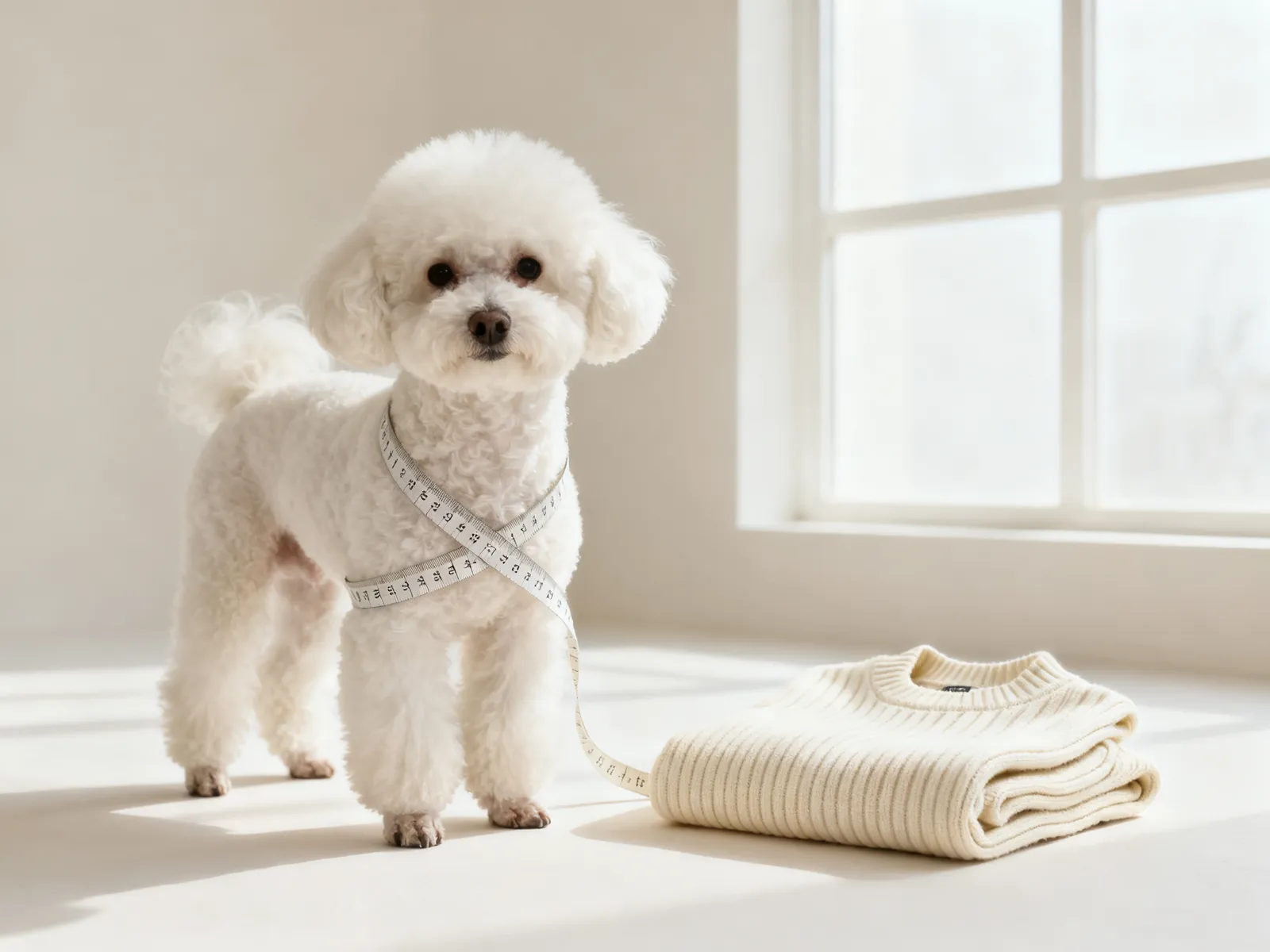
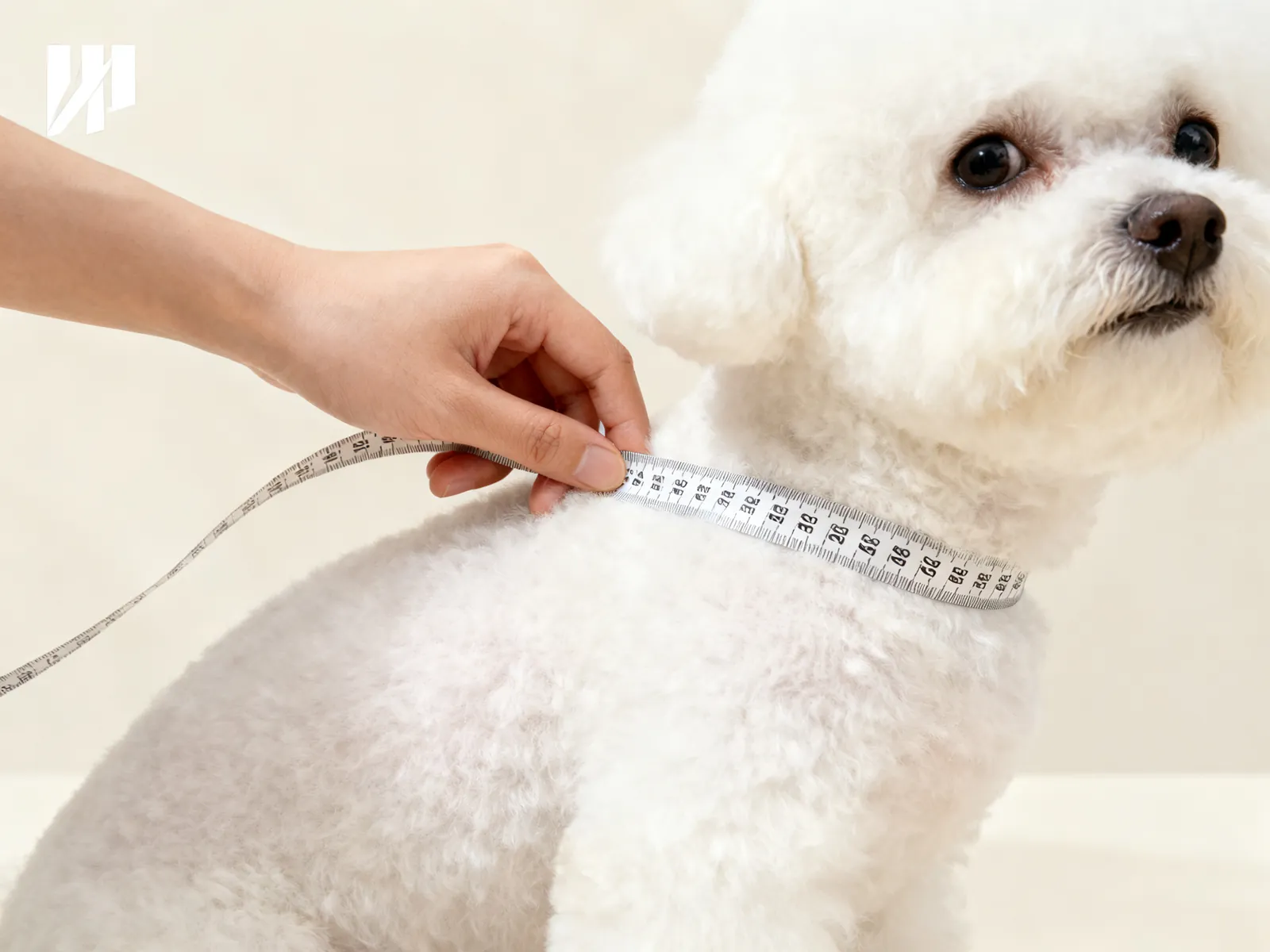
Measure chest girth around the widest part of the rib cage, with the tape level and close without compressing the coat. Measure neck circumference where the neckline is intended to sit. Measure back length from the chosen neck reference point to the intended hem position while the animal stands naturally.
 AI illustration
Record the measurement method alongside the values. Photos or diagrams of the tape position reduce ambiguity. Note coat type, body shape and whether the animal is between sizes. For stretch knits, also record the garment’s relaxed measurement, stretched behavior and intended ease rather than assuming that stretch solves every fit mismatch.
Use one unit system consistently in the working file. If both metric and imperial values are published, control the conversion and rounding rules so the chart does not create contradictory boundaries.
Body, Garment and Size Chart Data
Body measurements describe the intended wearer. Garment measurements describe the physical sweater. The selling chart tells a buyer how to choose. They are related, but they are not interchangeable.
Start with the target body range. Decide which chest and back proportions matter most for the product. Then compare garment dimensions and construction: neckline stretch, armhole position, rib recovery, hem shape and any sleeves or leg openings. Intended ease explains how the garment bridges body and product measurements.
For a close-fitting rib knit, negative ease may be deliberate; for a structured motif or low-stretch construction, a different allowance may be needed. Do not copy an ease assumption across materials or constructions without sample review.
When building the size run, inspect the gaps between adjacent sizes. A sequence may look orderly by label while leaving awkward jumps in chest or back length. Check the full grading logic and the expected sales mix before deciding which sizes to carry.
Fit Review
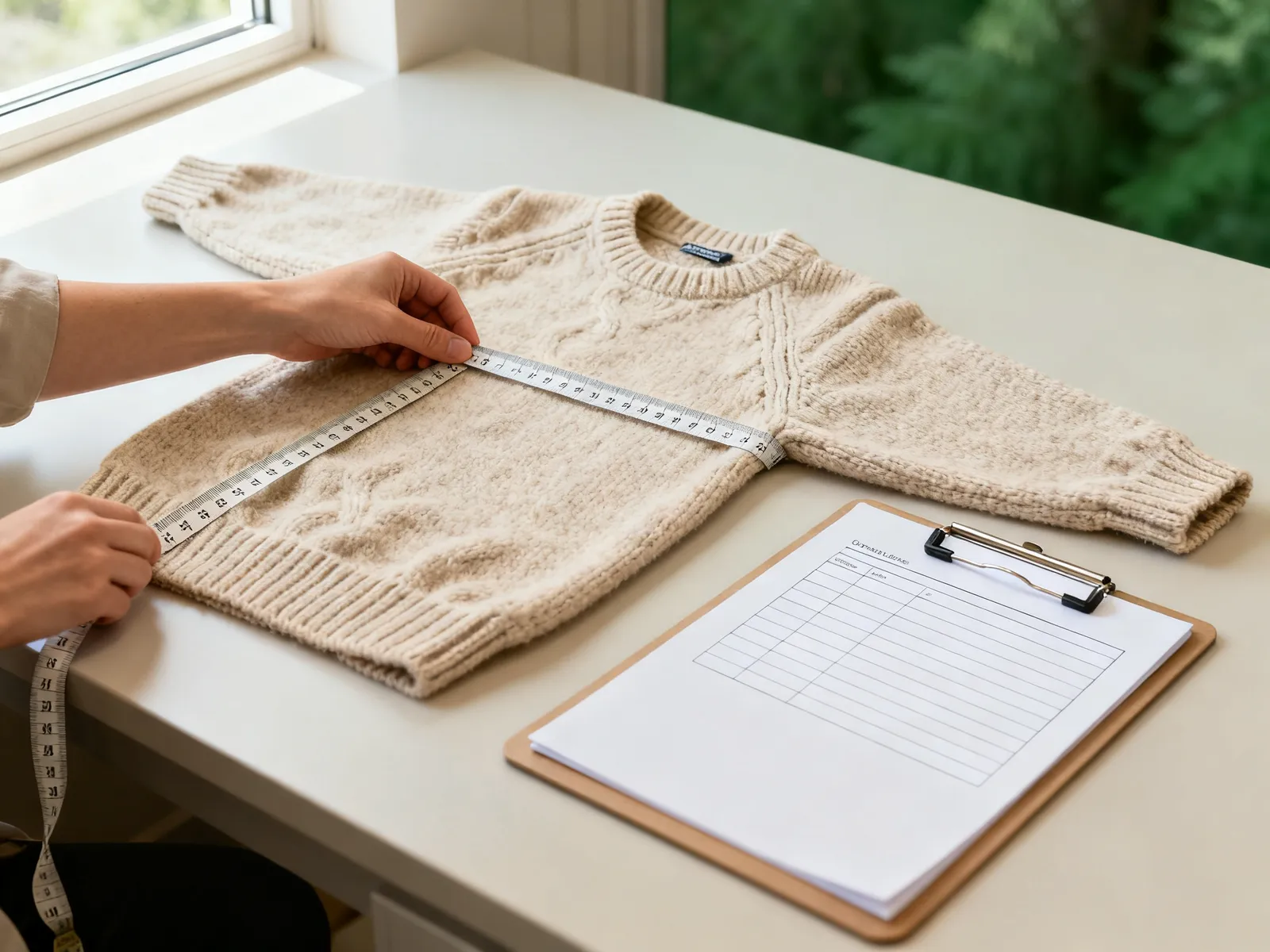
Create a measurement sheet with the exact body points, garment points and measurement conditions. Assign one owner for updates. Version the file so the quote, sample comments and production reference do not use different charts.
 AI illustration
Select representative fit subjects or forms across the intended range. Include relevant body-shape differences, not only a single average dog. Put the garment on without forcing openings. Check neckline comfort, chest coverage, back placement, armhole position, mobility, toileting clearance and whether the knit twists or rides up.
Document the fit from consistent angles. Note the subject’s measurements, garment size, observed issue and requested change. “Too small” is weak feedback; “chest is restrictive at the widest point while back length is acceptable” is actionable.
For long-body or sighthound-oriented cuts, treat the fit block as distinct. Do not assume the same grade will serve every body type. For cat-tagged products, confirm the actual measurement and mobility logic rather than treating the tag as proof of universal suitability.
Before placing an order, confirm the supplier-listed chart, measurement tolerance questions, material composition, stretch behavior, approved sample reference and size ratio. Commercial terms and available evidence are confirmed on quote.
Size Chart Layout
A selling chart should state whether its values are body measurements or garment measurements. If both are shown, label them separately. Explain where each measurement starts and ends, whether values are ranges, and how to choose when an animal sits near a boundary. Avoid a chart in which the same size label means different things across styles without a visible product-specific note.
Treat breed examples as orientation only. Individuals within a breed vary, mixed breeds vary further, and coat condition changes effective girth. Weight can hide important proportions: two animals with similar weight may have different chests, necks and backs. If breed or weight appears in buyer guidance, it should never override measured fit data.
Review openings as well as finished circumferences. A sweater can match the chest once worn but still be difficult to put over the head or guide through the legs. Ask how the neckline, armholes and hem stretch and recover. Check whether decorative jacquard, seams, plackets or trims change elasticity compared with a plain rib sample.
Size Mix
Separate size coverage from size quantity. Coverage asks which bodies the range can serve. Quantity asks how many units of each size the channel is likely to need. A broad size list is not useful if the product data cannot support confident selection, while a narrow range may exclude too much of the intended market.
Use your own sales or audience evidence where available. If no history exists, state that the first ratio is a test assumption and keep the replenishment question open. Do not convert a supplier’s available size list into a sales forecast. Confirm whether the selected sizes are available together and whether the ratio affects the quote.
For a multi-style assortment, check whether size labels and measurement logic are consistent across products. If they are not, customer-facing charts must remain style-specific. A centralized “small/medium/large” chart that hides product differences can create incorrect orders and returns.
Sample Revisions
Use a fit-review form that records sample ID, size, date, body measurements, reviewer, photos, observed issue, requested change and approval status. Separate objective observations from preferences. A measurement outside the agreed reference is different from a request to change the silhouette after seeing it.
When asking for a revision, explain the priority and the measurement consequence. Changing back length may affect motif placement; changing chest width may affect armholes; changing yarn or stitch can affect stretch. Ask whether the revision changes grading, sample scope or commercial terms. Approve a new reference only after the related measurements and construction are aligned.
Retain the approved size chart and sample context with the order record. If a repeat order uses a different material, supplier or construction, confirm whether the earlier fit evidence still applies. “Same size label” does not prove “same fit.”
Fit Help for Your Customers
Write short measurement instructions in the language of the selling market and use an original diagram or clearly authorized visual. Tell customers to measure while the animal stands naturally, keep the tape level, and prioritize the product’s most critical measurement. Explain how intended ease affects the choice and what to do between sizes.
Train customer-service or wholesale accounts to cite the style-specific chart rather than guess from breed. Capture recurring questions and returns by style and size. That evidence can improve the next buy, chart wording or fit block without pretending that one chart works for every dog sweater.
Using the Size Plan in a Quote
Use In-Stock Wholesale to review listed sizes as starting data. Some cards disclose only letter sizes or source-language ranges; they still need a measurement chart and fit review. Use Custom / OEM when the size block or grading itself needs development.
The sourcing FAQ lists the order minimums: 2 pcs per style for in-stock styles, so a size run can be tested in small quantities, and 100 pcs per style and color for custom styles. Size ratio, style and material still shape the practical order plan.
Send Your Sizing Details
Send the measurement method, target body range, intended fit, proposed size run, sample comments and quantity range through the contact form. Email tech packs, artwork or reference photos to [email protected]. Ask which measurement chart, tolerance evidence and sample review can be confirmed for the selected project.
The American Kennel Club dog apparel measuring guide uses the same three measurements: back length, chest girth and neck girth.
Questions
Which measurement matters most?
Chest girth matters most for fit. Neck girth and back length come next.
Should I size by breed or weight?
Use breed and weight as context only. Size from chest, neck and back-length measurements.
How do I choose a size mix?
Base it on the dogs your customers own and on past sales. Ask us for a suggested mix when you send quantities.
 AI illustration
Martin writes the Pawknit buyer guides. They cover ordering, sizing, materials and quality checks for dog sweaters.